Travel Duffle Bag, Vector Illustrations: A Designer’s Review
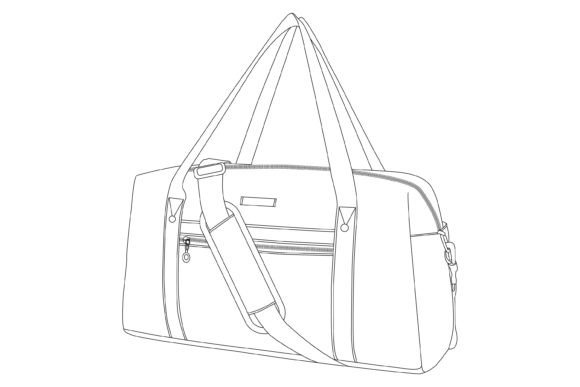
When I first opened Travel Duffle Bag, Vector Illustrations, I was prepping mood boards for a boutique weekend-garment brand launching a limited-edition camping capsule. The client wanted a rugged but refined look—something that felt both outdoorsy and elevated enough for a modern small business branding project. This set immediately caught my attention because it doesn’t just show a bag; it delivers a complete visual vocabulary around travel, utility, and casual luxury. The linework is clean, the proportions feel industry-standard, and the overall mood sits somewhere between a technical flat sketch and a lifestyle-ready illustration. It’s the kind of graphic design asset that can serve multiple roles without feeling like a generic stock graphic.
First Impressions and Visual Mood
The collection features a range of duffel silhouettes—from classic barrel shapes to sportier weekenders—rendered in a vector style that balances precision with a hand-drawn warmth. The strokes are consistent, the shading is subtle enough to allow for easy recoloring, and the overall composition feels intentionally modular. This isn’t a hyper-realistic 3D render; it’s a creative design asset that leaves room for the designer to add their own textures, patterns, or brand colors. The mood it creates is practical yet aspirational—think premium luggage catalogs, outdoor gear packaging, or a lifestyle blog’s hero image. For a client project, that tonal flexibility is gold.
Real Client Project: A Weekend Travel Brand Launch
Let me walk you through a recent scenario. I was working with a handmade business that produces leather and canvas duffel bags sold through Etsy and a small print-on-demand storefront. They needed visuals for a product launch that included a logo design, packaging design, social media teasers, and a sticker design for their inserts. Using Travel Duffle Bag, Vector Illustrations, I was able to pull the barrel bag sketch as the core visual for the brand mark, then repurpose the sport duffle cad drawing for a product mockup on a tote bag mockup. The consistency across the set meant that the brand identity felt cohesive from the website header to the sublimation design on a travel mug. For a small business with limited budget, having one asset that can serve both identity and mockup purposes is a real time-saver.
Where This Asset Performs Best
In my experience, Travel Duffle Bag, Vector Illustrations shines in situations where the bag is a hero element rather than a background detail. Here are the applications where it delivered strongest for me:
- Large layout areas and hero graphics – The detail in the flat sketch holds up beautifully when scaled to a full-page poster or a website hero section. The linework becomes a feature, not a flaw.
- Product mockups and packaging design – The vector format lets you wrap the illustration around a box, hang tag, or t-shirt design with zero loss of quality. I used it on a Canva template for a product launch and the client loved the clean, professional finish.
- Decorative accents and themed collections – For a seasonal campaign or a travel-themed editorial design, the duffel sketches add a lifestyle touch without overpowering the layout. They work well as supporting elements in a social media graphics set.
- Printable designs and Cricut projects – The outlined style is perfect for SVG design and PNG design use. I tested it on a Cricut project for a weekend bag label, and the cut lines were clean and easy to work with. It also works well for sticker design and sublimation design on rigid surfaces.
- Brand identity and logo design – The set can be used as a base for a custom logomark. I simplified one of the barrel bag vectors and paired it with a sans serif wordmark. The result was a distinctive, travel-adjacent identity that felt bespoke.
Where to Use This Asset with Caution
No design asset is universal, and Travel Duffle Bag, Vector Illustrations has its limits. I’d advise caution in these scenarios:
- Small sizes and crowded layouts – The detail that looks great on a poster can become muddy at 50 pixels wide. If you’re using it for a small icon or a tight web design element, consider simplifying the linework or using a single bag silhouette instead of a full composition.
- Low-contrast designs – The light shading on the bags can disappear against a light background. I recommend testing the asset on a dark or mid-tone surface before committing to a final layout. A black and white test is essential here.
- Minimalist branding and professional corporate materials – If your client’s brand is strictly minimal, the duffel sketches might feel too illustrative or casual. They lean toward a lifestyle and modern design aesthetic, so for a law firm or financial services brand, this would likely feel out of place.
- Very clean visual hierarchy – In layouts where the typography is the hero, the duffel illustration can compete for attention. Use it as a secondary element or in a dedicated visual zone rather than as a background texture.
How It Affects Readability, Hierarchy, and Brand Trust
The impact of Travel Duffle Bag, Vector Illustrations on a design’s readability is largely positive when used at the right scale. The open linework and clear silhouettes make it easy for the eye to track the shape, which helps with visual hierarchy. In a marketing visuals context, the duffel bag becomes a clear focal point that supports the headline rather than distracting from it. For brand consistency, the set offers a unified style across multiple touchpoints, which builds visual trust with the audience. When a customer sees the same bag illustration on a packaging design, a social media graphics post, and a product mockup, it reinforces the brand’s identity. That kind of emotional appeal and audience engagement is hard to achieve with a random stock photo.
Practical Designer Notes Before You Buy
Before you use Travel Duffle Bag, Vector Illustrations in a client project, here are the checks I always run:
- Test it in black and white – Convert the vector to grayscale and see if the linework holds up. If the shading blends into the background, you may need to adjust stroke weights or remove fill layers.
- Check contrast on light and dark backgrounds – The asset should remain legible on both. I previewed it on a white, light gray, and dark navy background. The duffel sketches read well on the mid-tone and dark surfaces, but the lighter ones required a subtle outline or shadow.
- Preview at small and large sizes – Scale the vector down to 1 inch and up to 24 inches. Look for any loss of detail or distortion. The set performed well at both extremes, but the fine interior lines became less visible at very small sizes.
- Place it on real mockups – Don’t just judge it on screen. I used a product mockup template for a duffel bag tag and a t-shirt design mockup. The real-world context helped me see how the illustration would behave in a retail setting.
- Test print quality – If you’re using it for printable design or sublimation design, print a sample at 300 DPI. The vector lines should be crisp, and the solid areas should not show banding. I printed a test on matte paper and it came out sharp.
- Review file formats – The set includes SVG design and PNG design files. I recommend working with the SVG for full editability, especially if you plan to recolor or resize. The PNG files are great for quick use in Canva templates or Cricut projects, but always check the transparency against your background.
- Inspect PNG transparency – I loaded the PNG into a dark layout and found a few stray pixels around the edges. This is common with vector exports, but it’s worth cleaning up if you’re using it in a high-precision commercial design.
- Check vector editability – Open the SVG in your preferred editor (I use Illustrator and Affinity Designer). Confirm that the layers are named, the paths are clean, and the shapes are compound. This set had well-organized layers, which made it easy to customize.
- Compare with font styles – I tested the asset with a serif font, a sans serif font, a script font, a handwritten font, and a display font. The duffel sketches paired best with a clean sans serif for a modern, utilitarian look, but a serif added a classic, heritage feel. The script and handwritten options felt less natural with the technical linework.
- Confirm commercial licensing – This is the most important step. Before using Travel Duffle Bag, Vector Illustrations for a client project, an Etsy product, or a print-on-demand item, verify the commercial license terms. Some design assets from creative marketplaces limit the number of copies or require attribution. I checked the license and it allowed for commercial use in a small business branding context, but I always recommend downloading the license file and keeping it in your project folder.
Why This Asset Belongs in Your Toolkit
After using Travel Duffle Bag, Vector Illustrations in a real client project, I can say it’s a reliable graphic design asset for anyone working in packaging design, brand identity, marketing visuals, or printable design. The set offers a cohesive visual language that supports both digital and physical applications. It’s not a one-trick pony; it’s a versatile illustration that can be adapted for logo design, product mockup, sticker design, t-shirt design, and social media graphics. For digital sellers, print-on-demand sellers, and small business owners, it provides a professional look without the need for custom illustration work. For designers, brand owners, and content creators, it’s a time-saving, scalable resource that elevates the final output. When you need a travel-themed visual that feels both technical and approachable, this set delivers.
Final Verdict for Real Client Work
I’d recommend Travel Duffle Bag, Vector Illustrations for any project where the duffel bag is a central visual element—whether it’s a packaging design, a brand identity, a product mockup, or a printable design. It works best in medium to large layouts, on clean backgrounds, and in combination with a strong, complementary typeface. Use it carefully in small sizes, low-contrast settings, or minimalist corporate contexts. Run the tests I outlined above, and always confirm the license. For a handmade business launching a weekend bag line, a small business branding project, or a creative design bundle for a creative marketplace, this asset is a solid choice. It’s a professional-grade graphic design asset that can help you deliver a polished, cohesive, and visually compelling result for your client.