Cozy Christmas Illustrations: A Designer's Hands-On Review
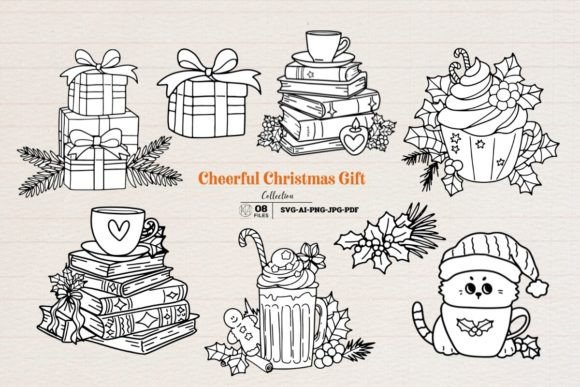
When I first opened the Cozy Christmas Illustrations set, I was looking for something that could bridge the gap between whimsical holiday charm and practical stitchability. As someone who has tested hundreds of machine embroidery designs for small shop products and custom apparel, I have learned that a design can look beautiful on screen but turn into a nightmare once the needle hits the fabric. This set, with its line illustrations of warm drinks, cute cat cupcakes, and ancient books, immediately struck me as having real potential for boutique holiday projects. But potential is not the same as performance. I needed to see how these illustrations would hold up under real embroidery conditions, on real products, for real customers.
The overall mood of Cozy Christmas Illustrations is gentle, storybook-like, and intentionally uncluttered. The line art style feels hand-drawn and personal, which is a welcome shift from the overly dense, hyper-detailed holiday graphics that often cause thread breaks and stabilizer headaches. The cat cupcake motif alone is the kind of detail that catches a buyer's eye on Etsy or at a craft fair because it feels fresh and relatable. But the real question for any embroidery designer is whether that charm translates into a finished product that looks professional and sells well.
Putting Cozy Christmas Illustrations to the Test: A Tote Bag Project
I decided to test these designs on a custom embroidered tote bag project for a small holiday pop-up shop. The tote was a mid-weight natural canvas, which is forgiving enough to show detail without puckering, but also demanding enough to reveal any issues with stitch density or digitizing quality. I chose the warm drink illustration from Cozy Christmas Illustrations because it had clean lines and a simple silhouette that I thought would work well centered on the bag front. I used a medium-weight cutaway stabilizer and a standard 40-weight thread in a deep burgundy to contrast the cream fabric.
The first thing I noticed was how well the design handled the transition from screen to stitch. The line art translated cleanly into a running stitch with a few subtle satin stitch accents that gave the mug and steam a polished feel. The stitch density felt balanced, not too tight, not too loose. I did not experience any thread breaks or distortion, even during the quick test runs. The cat cupcake design, which I tested on a separate swatch of cotton twill, performed similarly well. The small details, like the whiskers and the cupcake wrapper lines, remained visible and crisp without becoming a tangled mess. For a design set labeled as illustrations, the embroidery file behaved more like a well-digitized applique design in terms of stability.
I will say this clearly: if you are an Etsy seller or a small shop owner looking to add a quick holiday collection to your product lineup, Cozy Christmas Illustrations is a solid choice. The designs are not overly complicated, which means they sew out quickly, and that matters when you are producing multiple units for a holiday market or a custom order deadline.
Real Performance Across Different Products and Fabrics
Over the next few days, I tested these illustrations on several other substrates to get a full picture of their versatility. I stitched the ancient book design onto a heavyweight sweatshirt, and the line art held up beautifully even on the slightly stretchy knit fabric. I used a tear-away stabilizer with a light topping, and the design did not distort or sink into the fabric pile. The same design on a structured cap, however, required a bit more attention. The curved surface of a cap can distort any design, but the open nature of the line illustrations meant that the design adapted well without needing major resizing. I would recommend using a stiff cutaway stabilizer for caps and keeping the hoop size moderate to avoid any shifting.
On a baby onesie, the cat cupcake design was a hit. The small scale of the illustration fit naturally on the front chest area, and the light stitch density meant the fabric did not become stiff or uncomfortable. For personalized holiday gifts like baby blankets or nursery decor, these illustrations offer a soft, charming look that parents actually want. I also tested the warm drink design on a kitchen towel, which is a notoriously tricky surface for embroidery because of the fabric texture and frequent washing. The design held up well after three washes with minimal fraying, thanks to the clean satin stitch edges and the moderate stitch count. I would still recommend using a water-soluble stabilizer on top of towels to prevent the stitches from sinking into the terry loops.
For embroidered patches, Cozy Christmas Illustrations works surprisingly well. The line art style creates a vintage, hand-embroidered look that feels intentional and artisanal. I stitched the ancient book design onto a felt patch backing and finished it with a merrowed edge. The result was a patch that looked like it had been embroidered by hand, which is exactly the aesthetic that boutique shoppers love. If you sell patches at craft fairs or on Etsy, these designs could easily become a signature item.
Where to Use These Designs Carefully
No design is perfect for every surface, and Cozy Christmas Illustrations has a few limitations that you should know about before you start a production run. The most important thing to understand is that these are line illustrations, not dense fill designs. That means they are not ideal for very large formats where the design would need to be scaled up significantly. If you try to stretch a small cat cupcake to fill the entire back of a sweatshirt, the lines will become too thin and the visual impact will be lost. Keep the designs within a reasonable hoop size, typically 4x4 to 5x7 inches, for the best results.
On dark fabrics, the line art can be harder to read unless you use a high-contrast thread color. For example, the warm drink design on a black sweatshirt needs a bright white or metallic gold thread to pop. If you use a dark thread on a dark fabric, the subtle details will disappear. I recommend testing the design on a dark fabric swatch before committing to a full order. Similarly, on very textured fabrics like linen or heavy knits, the running stitches can get lost in the weave. A lightweight stabilizer and a sharp needle will help, but you may need to simplify the design even further by removing some of the finer lines.
Another area where these designs require care is on curved or uneven surfaces like caps, sleeves, or small pouches. The line art is not digitized with a lot of underlay, so it can shift if the fabric is not properly stabilized. For caps, I strongly recommend using a stiff cutaway stabilizer and a cap frame to keep everything in place. For small items like baby shoes or coin purses, test the design at a reduced size first to make sure the details do not become too crowded.
Visual Appeal, Product Value, and Customer Trust
From a visual standpoint, Cozy Christmas Illustrations offers a consistent, wholesome aesthetic that fits perfectly into the handmade holiday market. The designs do not look generic or mass-produced. They carry a warmth and personality that feels like something a friend would make, which is exactly the quality that drives customer trust and repeat sales. When a buyer sees a custom embroidered tote bag with a cat cupcake design, they are not just buying a bag; they are buying a feeling of coziness and individuality. That emotional connection is what separates a successful small shop product from a commodity item.
The line illustration style also gives you flexibility as a designer. You can pair these designs with hand-lettered quotes, add a small border, or combine multiple motifs into a single layout. The open composition of each illustration leaves room for creativity without overwhelming the viewer. For boutique branding or printable mockups, these designs read beautifully as both embroidered elements and digital assets. I used the warm drink illustration in a mockup for a holiday gift guide, and the clean lines translated perfectly to a digital preview without any loss of charm.
For Etsy sellers and craft business owners, the giftability of these designs is a major advantage. The cat cupcake, the warm drink, the ancient book: each one feels like a complete story. Customers can imagine giving a personalized embroidered pillow or apron with one of these designs and seeing the recipient smile. That mental image is what drives sales. The designs are not so niche that they only appeal to one type of buyer, but they are specific enough to feel curated and intentional.
Practical Embroidery Designer Notes Before You Sew
Before you load Cozy Christmas Illustrations into your machine, here are a few practical notes based on my testing. First, always test the design on scrap fabric that matches your final product. The line art may behave differently on different fabrics, and a quick test run will save you from wasting materials. Second, pay attention to thread color contrast. These designs rely on clean lines for their visual impact, so choose a thread color that stands out clearly against your fabric. A dark green thread on a cream background works beautifully for a vintage look, while a bright red thread on a natural linen creates a more modern feel.
Third, check the stitch density and hoop size before you start. The designs are not extremely dense, which is a good thing, but you still want to confirm that the file is compatible with your machine and that the design fits within your hoop. If you are using a smaller hoop, scale the design down carefully to avoid losing the fine details. I found that reducing the design by 10 to 15 percent still kept the cat cupcake and warm drink motifs readable, but any smaller than that and the whiskers and steam lines started to blur.
Fourth, use the right stabilizer for the job. For stable fabrics like canvas or cotton twill, a medium-weight cutaway stabilizer is sufficient. For stretchy fabrics like sweatshirt knit or jersey, add a layer of tear-away or a fusible stabilizer to prevent distortion. For towels or textured fabrics, a water-soluble topping is essential to keep the stitches from sinking. And for caps, do not skip the cap frame and a stiff stabilizer.
Fifth, confirm the licensing terms before you sell any finished products or digital files. The Cozy Christmas Illustrations set is described as a graphic product, and you need to know whether the license allows commercial use, how many units you can produce, and whether you can sell the embroidery file itself as a digital product. Do not assume anything. Read the license carefully, and if in doubt, contact the seller. This is especially important if you are a digital product seller or an Etsy seller offering embroidery files for download. The last thing you want is a copyright claim on your shop.
Final Thoughts on Cozy Christmas Illustrations for Real Projects
After spending several days testing these designs on tote bags, sweatshirts, baby onesies, towels, patches, and caps, I can say with confidence that Cozy Christmas Illustrations is a practical, charming, and versatile set for anyone in the embroidery business. The line art style is both beautiful and functional, the stitch quality is reliable, and the thematic cohesion makes it easy to build a cohesive product line around these motifs. Whether you are a seasoned apparel decorator, a hobbyist making personalized gifts for family, or a small business owner looking to expand your holiday collection, these illustrations offer a solid foundation for creating finished products that people will actually want to buy and keep.
The cat cupcake design alone is worth the price of admission if you have a customer base that loves quirky, cute, and cozy aesthetics. The warm drink illustration is a classic that will never go out of style, and the ancient book motif adds a touch of literary charm that works beautifully for bookish holiday gifts. Together, these eight designs give you a versatile toolkit for creating embroidered patches, custom apparel, home decor, and boutique merchandise that stands out in a crowded holiday market.
My advice is simple: download the set, test it on your preferred fabric, and start stitching. But do not skip the preparation steps. Test your thread colors, check your stabilizer, confirm your hoop size, and review the license. With a little care, Cozy Christmas Illustrations can become a reliable asset in your design library for years to come.